This is a shortened version of an article I found in the UK newspaper “The Independent”, 19 June 2026
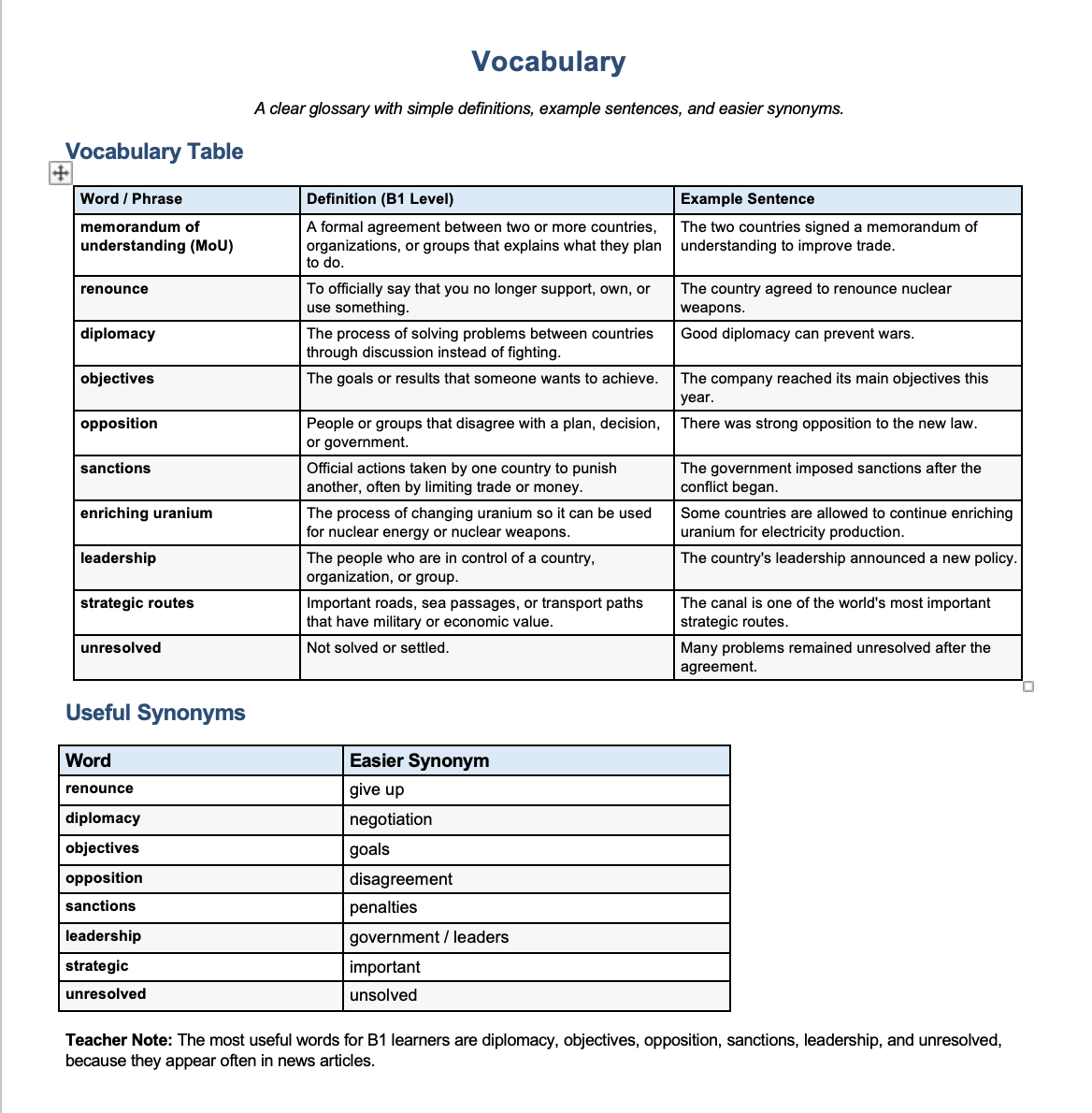
The article is edited for teaching purposes, and I’ve added a glossary. It is short for one reason: I want my students to practice reading about a wide range of topics, so if you are not used to reading about politics, this will help you practice the language you need without overwhelming you. Any issues, I’m available via WhatsApp and contact form. Thank you all.
New ‘Treaty of Versailles’ Forgets History at Its Peril
Donald Trump signed a memorandum of understanding (MoU) with Iran at the Palace of Versailles, alongside Secretary of State Marco Rubio and French President Emmanuel Macron. Although presented as a historic achievement, the agreement had already been approved by both sides, and Iran was not represented at the ceremony. Israel was also excluded from the negotiations.
Despite its flaws, the agreement ends a costly and dangerous war. Iran has agreed to renounce nuclear weapons, but critics argue that the conflict was unnecessary because similar outcomes could have been achieved through diplomacy. The war ended largely because the United States failed to achieve its objectives and is unlikely to resume military action, especially with political pressures at home and upcoming elections.
Trump now faces opposition from Senate Republicans, who must review parts of the agreement. Politically, he appears weakened by the process. Israel has also emerged in a worse position. The war was intended to reduce Iranian power and improve Israeli security, but the final agreement allows Iran to continue developing ballistic missiles and enriching uranium for civilian purposes. Israel was not consulted and strongly opposes the terms.
Meanwhile, Iran appears stronger than before the war. Its leadership remains in power, sanctions may be eased, and its economy could recover through increased oil and gas exports. The conflict also demonstrated Iran’s growing ability to use drones and control strategic routes such as the Strait of Hormuz.
Like the 1919 Treaty of Versailles, this agreement may have ended a war, but it leaves many important problems unresolved.